Download today's Lesson Outline, or create your FREE account to instantly unlock the complete Premium Study Package✓ Complete verse-by-verse commentary✓ Teacher's and student guides✓ Printable lesson outline✓ Quiz and answer key✓ Additional study resources when available.
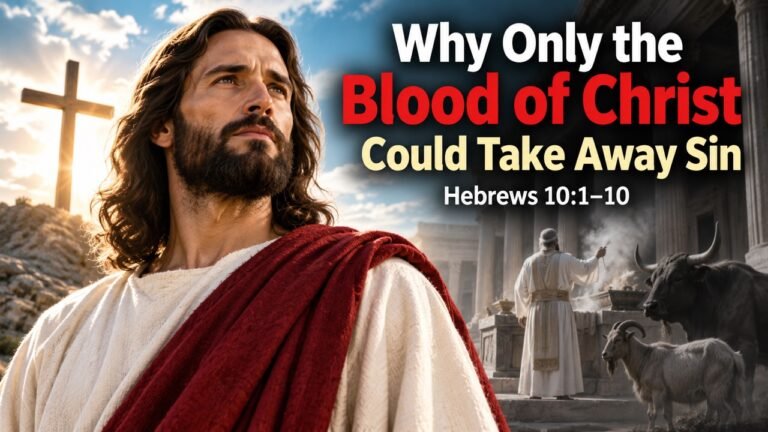
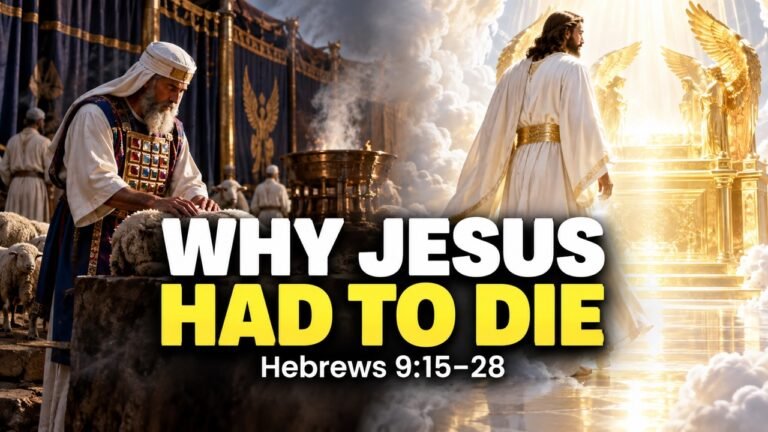
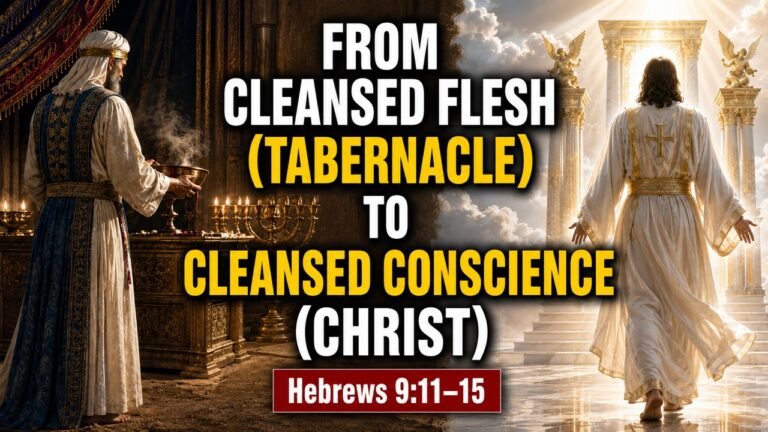
The sacrifice of Jesus accomplishes what the animal sacrifices under the law of Moses could never accomplish. Those repeated offerings could not take away sins or bring the worshiper’s conscience to completion. Christ, however, offered Himself once for all, providing the cleansing and access to God that those sacrifices anticipated (Hebrews 9:9, 14; 10:1–4, 10–14).
That is the foundation of Hebrews 10:19–25. Through the blood of Jesus, believers are invited to draw near to God, hold fast their confession, and encourage one another through gathering together. This access extends to all who belong to Christ.
But what happens if, under persecution, these believers turn back to the temple sacrifices as a means of drawing near to God? That question brings us to the warning.
The seriousness of turning back
“For if we go on sinning willfully after receiving the knowledge of the truth, there no longer remains a sacrifice for sins” (Hebrews 10:26).
We must identify the particular sin within the context. These Jewish believers were being pressured to return to the old order of worship. Yet they had received the truth concerning Christ—His greater priesthood, His effectual sacrifice, and His fulfillment of what the Mosaic system presented in shadows.
Returning to animal sacrifices would disregard that truth. Those offerings could never take away sins, and they cannot now provide an alternative to Christ. There is nothing effectual to return to.
Verse 27 describes the consequence with severe language: “a terrifying expectation of judgment and the fury of a fire which will consume the adversaries.” Notice the reversal. Those invited to draw near through Christ are warned that rejecting His sacrifice places them in opposition to God.
The greater covenant brings greater accountability
Hebrews 10:28 recalls Deuteronomy 17:2–7, especially verse 6. A person who violated God’s covenant by serving other gods faced physical death upon the testimony of two or three witnesses.
The writer argues from the lesser to the greater. If setting aside the law of Moses brought death without mercy, what punishment does someone deserve who disregards the Son of God?
Hebrews 10:29 describes this rejection in three ways: trampling underfoot the Son, regarding His covenant blood as defiled, and insulting the Spirit of grace. Returning to the temple sacrifices would carry the meaning of contempt for Christ’s accomplished work.
Notice also the words “by which he was sanctified.” ἡγιάσθη (hēgiasthē), from ἁγιάζω (hagiazō), is an aorist passive indicative. It describes a sanctifying action received by the person. Read alongside Hebrews 10:10, 14, our teaching understands this as the believer’s accomplished position through Christ’s offering.
The believer’s salvation is secure, but that security does not remove accountability. This warning concerns severe temporal punishment for disregarding Christ’s sacrifice.
The quotations in verse 30 come from Deuteronomy 32:35–36: vengeance belongs to God, and the Lord judges His people. Verse 31 seals the warning: “It is a terrifying thing to fall into the hands of the living God.”
Remember your former endurance
“But remember the former days” marks the turn toward encouragement (Hebrews 10:32).
These believers had already suffered because of their faith. They endured public humiliation and affliction, and they stood alongside others receiving the same treatment (verses 32–33). Their community shared hardship and strengthened one another. This recalls the call to mutual encouragement in Hebrews 10:24–25.
Some had been imprisoned. Others experienced the seizure of their possessions. Yet the writer reminds them that they accepted those losses with joy (verse 34).
Why could they have joy in such painful circumstances? They knew they had “a better and lasting possession.” Their hope reached beyond possessions that could be confiscated or destroyed. They looked toward the eternal inheritance promised through Christ (Hebrews 9:15).
He calls them to remember that confidence and endure again.
Live by faith until He comes
“Therefore, do not throw away that confidence of yours, which has a great reward” (Hebrews 10:35).
They needed endurance to continue doing God’s will and receive the promise (verse 36). Within this context, doing His will means holding to Christ and the reality of His sacrifice through persecution. They must not retreat to the old sacrifices.
Verses 37–38 draw from Habakkuk 2:3–4, with the opening phrase about “a very little while” echoing Isaiah 26:20. The coming One will come. At Christ’s return, believers will experience the full realization of salvation and the promised reward.
Meanwhile, “My righteous one shall live by faith.” Faith sustains endurance: we hold to Christ because we believe who He is, what He accomplished, and what He has promised.
Finally, verse 39 closes with confidence in his hearers. As in Hebrews 6:9–12, the writer follows severe warning with encouragement. He expects them to continue in faith, “to the preserving of the soul.”
Present suffering is real, but so is the lasting possession awaiting them. Keep your confidence. Strengthen one another. Hold on to Jesus until He returns.
Deep biblical study with insights from the original Greek and Hebrew texts.
Exploring the richness of Scripture through detailed study of the original biblical languages, grammar, historical background, and literary context to uncover the depth and precision of God’s revelation.
Verse-by-verse teaching rooted in the authority of Scripture.
Carefully walking through each passage in its biblical context, examining the meaning of the text line by line, with a commitment to faithful interpretation and the full authority of God’s Word.
Clear, serious exposition focused on truth, context, and sound doctrine.
Presenting Scripture with clarity and careful analysis, emphasizing accurate interpretation, theological depth, and the importance of understanding God’s Word within its proper historical and biblical context.
Christ-centered teaching that equips believers to understand and live God’s Word.
Focusing on the person and work of Jesus Christ while helping believers grow in spiritual maturity, biblical understanding, discernment, and faithful obedience to the truths of Scripture.
Exploring Scripture carefully, faithfully, and without compromise.
Approaching the Bible with reverence, precision, and integrity—seeking to handle the text honestly, remain faithful to its intended meaning, and uphold the truth of God’s Word without distortion or cultural pressure.
Stay Connected to New Studies
Stay connected with the latest Bible studies, verse-by-verse teachings, article updates, and new video content. Join the newsletter to receive thoughtful biblical teaching, Scripture insights, and ministry updates directly in your inbox.
Have more questions?
If you would like more information about the ministry, need assistance with the website or resources, or simply want to get in touch, feel free to send a message.