Download today's Lesson Outline, or create your FREE account to instantly unlock the complete Premium Study Package✓ Complete verse-by-verse commentary✓ Teacher's and student guides✓ Printable lesson outline✓ Quiz and answer key✓ Additional study resources when available.
The modern approach to the Ten Commandments frequently reduces them to a sterile moral checklist or a collection of legal boundaries. However, a deeper look into Exodus Chapter 20 reveals an entirely different reality. These are not merely administrative rules; they represent the structural foundations of a divine suzerainty covenant, given by a holy Sovereign to a people He had already delivered by His unmerited grace.
When the children of Israel arrived at the base of Mount Sinai, exactly three months after their dramatic exodus from Egypt, they did not encounter a casual deity. They were met with absolute theophanic power—thunder, lightning, continuous fire, and a supernatural trumpet blast that grew louder and louder. This terrifying setting was carefully calibrated by Yahweh to instill a deep, lasting reverence within the collective consciousness of His people. Holiness, from the Hebrew root qadosh, implies an absolute separation from the common and the ordinary. Before a single commandment was spoken, the nation underwent strict ceremonial purification, underscoring that to walk with God requires a complete break from the lifestyle of Egypt.
The text reveals that the Decalogue is fundamentally divided into two major relational areas. The first four commandments govern the vertical relationship between humanity and Yahweh, outlining the parameters of accurate worship, the weight of the divine Name, and the radical rest of the Sabbath. The remaining six commandments look outward along the horizontal axis, guarding communal life by protecting parental honor, the absolute sanctity of human life, marital commitment, personal property, and institutional truth. The entire structure culminates in the tenth commandment against covetousness—a heart-level restriction that addresses the internal motivations that inevitably drive external violations.
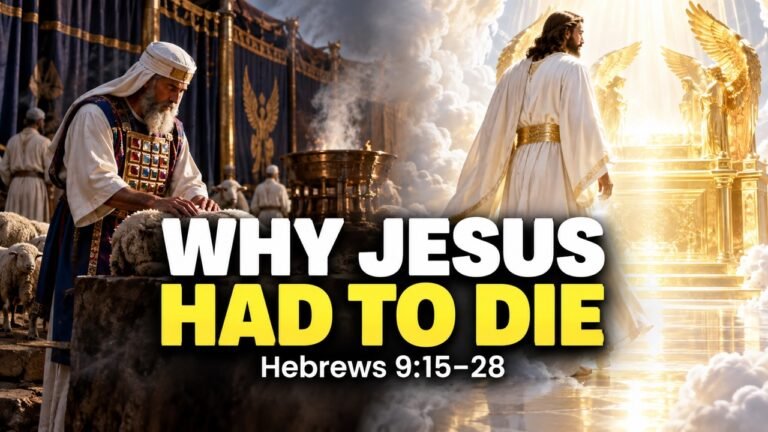
True restoration is beautifully represented at the close of the chapter, where Yahweh provides the blueprint for sacrificial altars. Built of simple earth or unhewn stone, these altars were completely profaned the moment a human being applied an iron tool to them. This architectural reality serves as an undeniable historical foreshadowing of the Gospel: human merit, performance, and self-righteousness can never improve or contribute to the ground of reconciliation. True atonement is entirely a sovereign work of grace, achieved through faith alone in the perfect sacrifice of Christ.
Deep biblical study with insights from the original Greek and Hebrew texts.
Exploring the richness of Scripture through detailed study of the original biblical languages, grammar, historical background, and literary context to uncover the depth and precision of God’s revelation.
Verse-by-verse teaching rooted in the authority of Scripture.
Carefully walking through each passage in its biblical context, examining the meaning of the text line by line, with a commitment to faithful interpretation and the full authority of God’s Word.
Clear, serious exposition focused on truth, context, and sound doctrine.
Presenting Scripture with clarity and careful analysis, emphasizing accurate interpretation, theological depth, and the importance of understanding God’s Word within its proper historical and biblical context.
Christ-centered teaching that equips believers to understand and live God’s Word.
Focusing on the person and work of Jesus Christ while helping believers grow in spiritual maturity, biblical understanding, discernment, and faithful obedience to the truths of Scripture.
Exploring Scripture carefully, faithfully, and without compromise.
Approaching the Bible with reverence, precision, and integrity—seeking to handle the text honestly, remain faithful to its intended meaning, and uphold the truth of God’s Word without distortion or cultural pressure.
Stay Connected to New Studies
Stay connected with the latest Bible studies, verse-by-verse teachings, article updates, and new video content. Join the newsletter to receive thoughtful biblical teaching, Scripture insights, and ministry updates directly in your inbox.
Have more questions?
If you would like more information about the ministry, need assistance with the website or resources, or simply want to get in touch, feel free to send a message.