Download today's Lesson Outline, or create your FREE account to instantly unlock the complete Premium Study Package✓ Complete verse-by-verse commentary✓ Teacher's and student guides✓ Printable lesson outline✓ Quiz and answer key✓ Additional study resources when available.
Why return to sacrifices that could never take away sins when Christ has already offered the sacrifice that does?
Our previous lesson examined why Jesus had to die to inaugurate the new covenant. In Hebrews 10:1–10, the writer turns more directly to the nature of Christ’s sacrifice—why His blood accomplishes what the blood of bulls and goats never could.
The central verse states the problem plainly:
“For it is impossible for the blood of bulls and goats to take away sins.” — Hebrews 10:4, LSB
The Shadow Could Not Accomplish the Reality
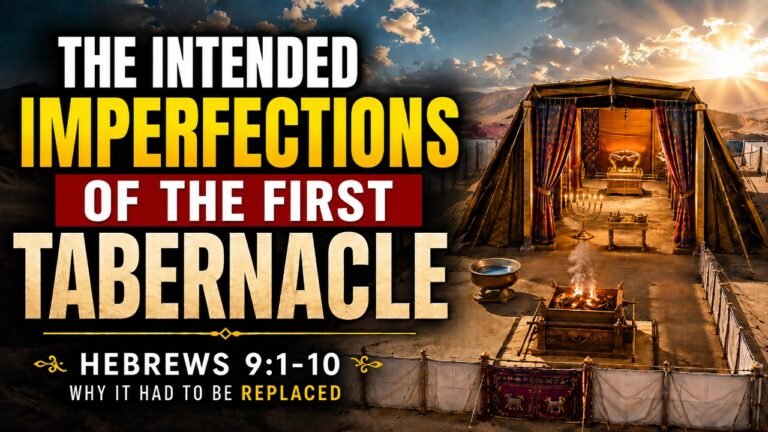
The Law’s sacrifices were instituted by God, but they were never intended to provide the final removal of sin. They were shadows pointing forward to something greater.
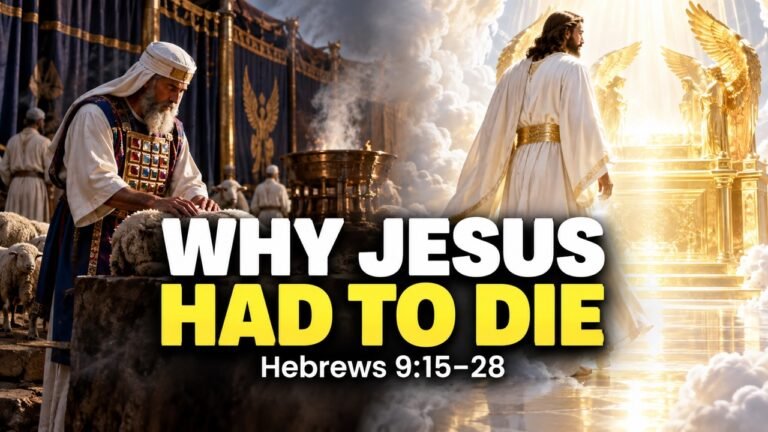
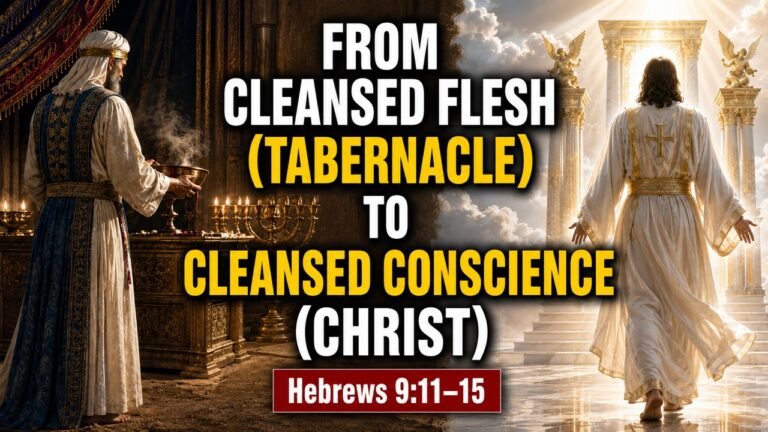
The yearly repetition of the Day of Atonement demonstrated their limitation. Had those sacrifices fully cleansed the worshipers, the offerings would have ceased. Instead, they brought a recurring reminder of sins. They provided ceremonial covering, but animal blood could not accomplish the definitive cleansing of the conscience described in this passage (Hebrews 10:1–4).
God Himself Provided the Sacrifice
The answer to that insufficiency appears in Christ’s declaration: “A body You have prepared for Me” (Hebrews 10:5).
The sacrifice that would take away sin was not another animal brought by a worshiper. God Himself provided His Son, who willingly offered Himself in the human body God prepared for Him. Human guilt required more than animal blood: it required the perfect, sinless Messiah.
Nor was His sacrificial death an unforeseen development. The quotation from Psalm 40 presents His coming to do God’s will as the fulfillment of what Scripture had already announced (Hebrews 10:5–7).
One Offering, a Completed Work
Christ’s obedience brings the argument to its conclusion. The first sacrificial order gives way to the sacrifice that accomplishes God’s will. Through the offering of Jesus Christ’s body, we have been sanctified once for all (Hebrews 10:8–10).
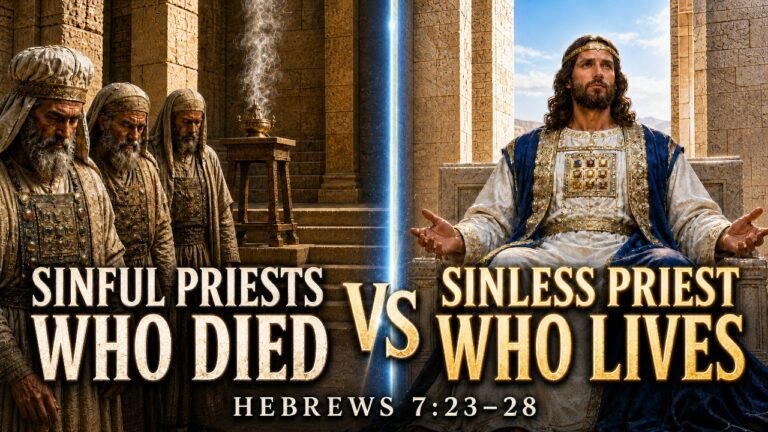
His sacrifice does not need repetition because it is sufficient. It provides what animal blood could not: forgiveness, cleansing, and acceptance before God. Its finality rests upon its perfection.
That is the force of the writer’s appeal: Why return to the shadows when the blood of Christ has accomplished what those sacrifices never could?
Deep biblical study with insights from the original Greek and Hebrew texts.
Exploring the richness of Scripture through detailed study of the original biblical languages, grammar, historical background, and literary context to uncover the depth and precision of God’s revelation.
Verse-by-verse teaching rooted in the authority of Scripture.
Carefully walking through each passage in its biblical context, examining the meaning of the text line by line, with a commitment to faithful interpretation and the full authority of God’s Word.
Clear, serious exposition focused on truth, context, and sound doctrine.
Presenting Scripture with clarity and careful analysis, emphasizing accurate interpretation, theological depth, and the importance of understanding God’s Word within its proper historical and biblical context.
Christ-centered teaching that equips believers to understand and live God’s Word.
Focusing on the person and work of Jesus Christ while helping believers grow in spiritual maturity, biblical understanding, discernment, and faithful obedience to the truths of Scripture.
Exploring Scripture carefully, faithfully, and without compromise.
Approaching the Bible with reverence, precision, and integrity—seeking to handle the text honestly, remain faithful to its intended meaning, and uphold the truth of God’s Word without distortion or cultural pressure.
Stay Connected to New Studies
Stay connected with the latest Bible studies, verse-by-verse teachings, article updates, and new video content. Join the newsletter to receive thoughtful biblical teaching, Scripture insights, and ministry updates directly in your inbox.
Have more questions?
If you would like more information about the ministry, need assistance with the website or resources, or simply want to get in touch, feel free to send a message.

Why Was a New Covenant Needed?