0 of 3 used this week
Guest Access
Register FREE to unlock the complete Premium Study Package and premium lesson assets.
Guest visitor
Register free for premium access
Register free to unlock the complete Premium Study Package.
0 of 3 used this week
Register FREE to unlock the complete Premium Study Package and premium lesson assets.
Guest visitor
Register free for premium access
Register free to unlock the complete Premium Study Package.
0 of 3 used this week
Register FREE to unlock the complete Premium Study Package and premium lesson assets.
Guest visitor
Register free for premium access
Register free to unlock the complete Premium Study Package.
Registration is FREE, takes less than a minute, and helps us continue providing high-quality Bible study materials at no cost.
The doctrine of divine election is one of the most magnificent yet challenging truths revealed in the Holy Scriptures. When the human mind encounters the reality of God’s absolute sovereignty—particularly His unconditional choice of some unto salvation and the passing over of others—the immediate, carnal reaction is to charge God with injustice. In Romans 9:14, the Apostle Paul directly addresses this natural resistance: “What shall we say then? There is no injustice with God, is there? May it never be!”
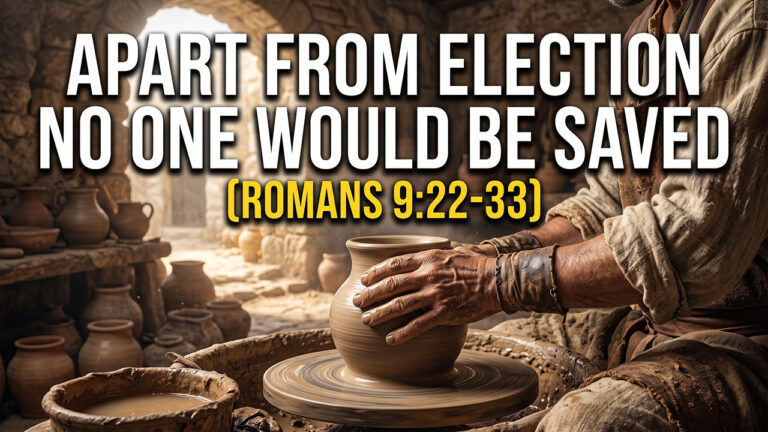
To understand the truth of election, we must recognize that all of humanity stands naturally condemned in Adam. We represent a single, corrupted lump of clay. If God were to condemn all of us, He would be perfectly just. The fact that He saves any is an act of pure, unmerited mercy. Paul systematically excludes the human element of will or performance, writing, “So then it does not depend on the man who wills or the man who runs, but on God who has mercy.” Furthermore, Paul uses the historical figure of Pharaoh to demonstrate the active, sovereign nature of divine hardening. Pharaoh was raised to supreme power by God’s decree, and his heart was hardened for a singular purpose: to display God’s power and proclaim His holy name throughout the earth. Ultimately, the creature has no standing to question the Creator. Like clay in the hands of the Potter, we must bow in deep humility and worship before the Sovereign God who has the absolute right to fashion His vessels according to His divine purpose.
Where Do You Find Strength in Trials? (Hebrews 4:14-16)