Keep this lesson and your reflections together in My Study. Save it now, then return whenever you’re ready.
Download Today's Lesson
Download today's Lesson Outline, or create your FREE account to instantly unlock the complete Premium Study Package✓ Complete verse-by-verse commentary✓ Teacher's and student guides✓ Printable lesson outline✓ Quiz and answer key✓ Additional study resources when available.
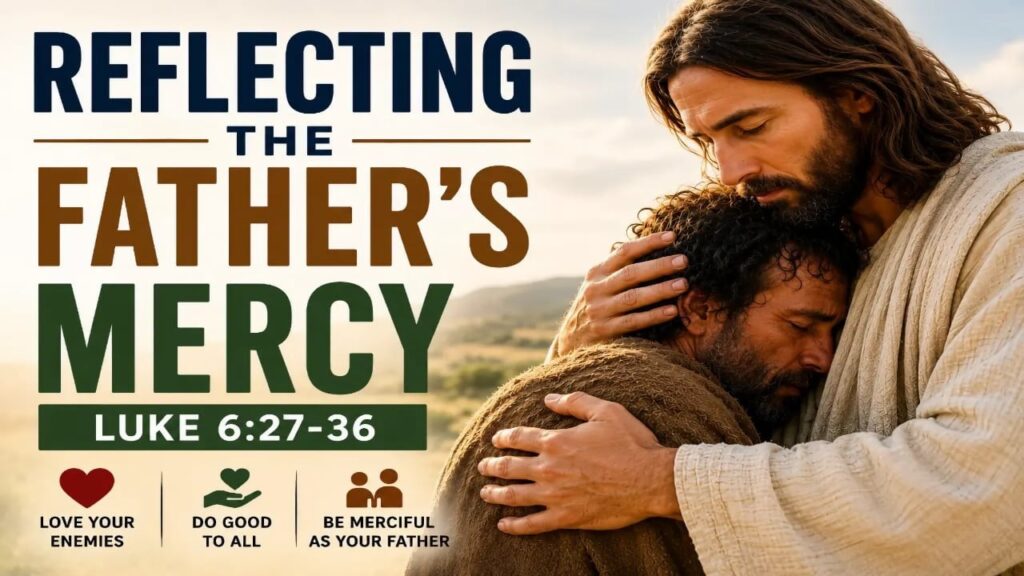
The human heart is naturally wired for reciprocity. We love those who love us, do good to those who treat us well, and protect our resources by investing them where a return is guaranteed. It is a transactional morality—a horizontal system of mutual self-interest that rules this present evil age. But when Jesus Christ stands on the plain in Luke 6, He shatters this conventional framework by delivering the radical, counter-cultural ethics of the Kingdom of God.
Following His profound declarations of the blessings and woes, Jesus turns His attention back to those who have ears to hear. He issues a fourfold mandate that cuts through natural human pride: love your enemies, do good to those who hate you, bless those who curse you, and pray for those who mistreat you. Kingdom love is not an fleeting emotion or a passive sentiment; it is defined by aggressive, proactive, visible benevolence directed toward the very individuals who actively seek our harm.
To live this way requires a heart that has been supernaturally regenerated by sovereign grace. Jesus exposes the moral bankruptcy of standard human virtue by noting that “even sinners” can love their friends and lend for a calculated profit. The distinctive mark of a child of God is the willingness to extend mercy without calculation, expecting absolutely nothing in return.
When we engage in this radical non-retaliation and open-handed generosity, we do not earn our salvation; rather, we display the supernatural “family resemblance” of our heavenly Father. Our King is universally kind to the ungrateful and evil, pouring out common grace through sun and rain upon a rebellious world. As citizens of His Kingdom, we are called to look past our wounds, remember that we too were once spiritual enemies reconciled by infinite grace, and embody the towering climax of Christ’s discourse: “Be merciful, just as your Father is merciful.”
Deep biblical study with insights from the original Greek and Hebrew texts.
Exploring the richness of Scripture through detailed study of the original biblical languages, grammar, historical background, and literary context to uncover the depth and precision of God’s revelation.
Verse-by-verse teaching rooted in the authority of Scripture.
Carefully walking through each passage in its biblical context, examining the meaning of the text line by line, with a commitment to faithful interpretation and the full authority of God’s Word.
Clear, serious exposition focused on truth, context, and sound doctrine.
Presenting Scripture with clarity and careful analysis, emphasizing accurate interpretation, theological depth, and the importance of understanding God’s Word within its proper historical and biblical context.
Christ-centered teaching that equips believers to understand and live God’s Word.
Focusing on the person and work of Jesus Christ while helping believers grow in spiritual maturity, biblical understanding, discernment, and faithful obedience to the truths of Scripture.
Exploring Scripture carefully, faithfully, and without compromise.
Approaching the Bible with reverence, precision, and integrity—seeking to handle the text honestly, remain faithful to its intended meaning, and uphold the truth of God’s Word without distortion or cultural pressure.
Stay Connected to New Studies
Stay connected with the latest Bible studies, verse-by-verse teachings, article updates, and new video content. Join the newsletter to receive thoughtful biblical teaching, Scripture insights, and ministry updates directly in your inbox.
Have more questions?
If you would like more information about the ministry, need assistance with the website or resources, or simply want to get in touch, feel free to send a message.