Download today's Lesson Outline, or create your FREE account to instantly unlock the complete Premium Study Package✓ Complete verse-by-verse commentary✓ Teacher's and student guides✓ Printable lesson outline✓ Quiz and answer key✓ Additional study resources when available.
The architectural majesty of God’s redemptive work is often viewed through the narrow lens of human experience. However, the opening chapter of Ephesians invites us to lift our eyes above the temporal horizon and gaze into the pre-temporal counsels of the Triune God. In Ephesians 1:7-23, we discover that salvation is not a historical contingency or a divine reaction to human failure, but an unshakeable blueprint purposed in eternity past and executed with absolute precision.
The Economics of Redemption
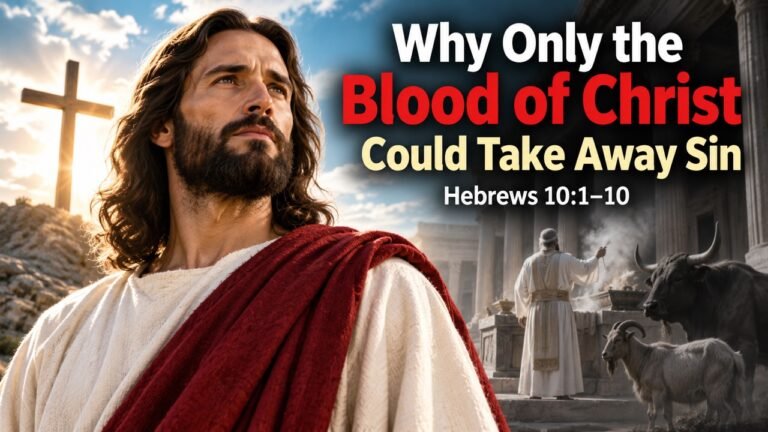
Paul initiates this section with a profound theological declaration: “In him we have redemption through his blood, the forgiveness of our trespasses.” The word utilized for redemption is the Greek apolutrosis, a commercial term signifying the buying back of a slave out of bondage by paying a specific ransom price. Our natural state was one of helpless captivity to sin, under the righteous condemnation of holy justice.
The transaction required an infinite price: the physical blood of Jesus Christ poured out in substitutionary death on the cross. This blood satisfies the holy justice of God, transforming our bankrupt spiritual standing into an overflowing account of grace. This grace is not rationed or carefully measured out; it is “lavished” upon us in perfect divine wisdom and insight.
The Sealed Guarantee
For the Gentile believers who were historically alienated from the covenants of promise, the gospel establishes a radical inclusion. Paul highlights an intentional shift in pronouns, moving from “we” (the Jewish remnant who first hoped in the Messiah) to “you also” (Gentile converts). Upon hearing the word of truth and believing, these new heirs were instantly “sealed with the Holy Spirit of promise.”
In the ancient Greco-Roman world, a seal (sphragizo) denoted undisputed ownership, unalterable authenticity, and perfect security. The indwelling Holy Spirit serves as God’s personal stamp of ownership on the believer’s soul. Furthermore, the Spirit is identified as our arrabon—a legal, non-refundable down payment or earnest money that guarantees the final delivery of our complete eternal inheritance.
Ultimate Cosmic Headship
The grand climax of chapter one transitions from individual redemption to absolute cosmic sovereignty. The same omnipotent power that is currently active within the believer is the exact power that raised Jesus Christ bodily from the dead and seated Him at the right hand of the Majesty in the heavenly places.
Christ stands exalted “far above all rule and authority and power and dominion,” an immutable sovereignty that spans both this present age and the age to come. All things are judicially placed under His feet. Most gloriously, this supreme cosmic Ruler is gifted to the Church as its organic Head. The Church, as His mystical body, represents the absolute fullness of Him who fills all things in all places, serving as the visible manifestation of His ultimate victory.
Deep biblical study with insights from the original Greek and Hebrew texts.
Exploring the richness of Scripture through detailed study of the original biblical languages, grammar, historical background, and literary context to uncover the depth and precision of God’s revelation.
Verse-by-verse teaching rooted in the authority of Scripture.
Carefully walking through each passage in its biblical context, examining the meaning of the text line by line, with a commitment to faithful interpretation and the full authority of God’s Word.
Clear, serious exposition focused on truth, context, and sound doctrine.
Presenting Scripture with clarity and careful analysis, emphasizing accurate interpretation, theological depth, and the importance of understanding God’s Word within its proper historical and biblical context.
Christ-centered teaching that equips believers to understand and live God’s Word.
Focusing on the person and work of Jesus Christ while helping believers grow in spiritual maturity, biblical understanding, discernment, and faithful obedience to the truths of Scripture.
Exploring Scripture carefully, faithfully, and without compromise.
Approaching the Bible with reverence, precision, and integrity—seeking to handle the text honestly, remain faithful to its intended meaning, and uphold the truth of God’s Word without distortion or cultural pressure.
Stay Connected to New Studies
Stay connected with the latest Bible studies, verse-by-verse teachings, article updates, and new video content. Join the newsletter to receive thoughtful biblical teaching, Scripture insights, and ministry updates directly in your inbox.
Have more questions?
If you would like more information about the ministry, need assistance with the website or resources, or simply want to get in touch, feel free to send a message.